

Are Custom Orthotics Worth It? What You're Actually Paying For
Monday, July 20, 2026
Is it really worth spending several hundred pounds on a pair of insoles or orthotics when supermarket alternatives cost a fraction of the price? It is a fair question, and one that deserves a proper answer rather than a sales pitch. Are custom orthotics worth it depends entirely on what is driving your foot pain, how long you have been managing it, and whether generic support has already failed to resolve the problem. If you have tried shop-bought insoles without lasting relief, or you are simply trying to understand what you would actually be paying for, this guide breaks down the real cost, the genuine benefits, and the situations where the investment makes sense.
What Are Custom Orthotics?
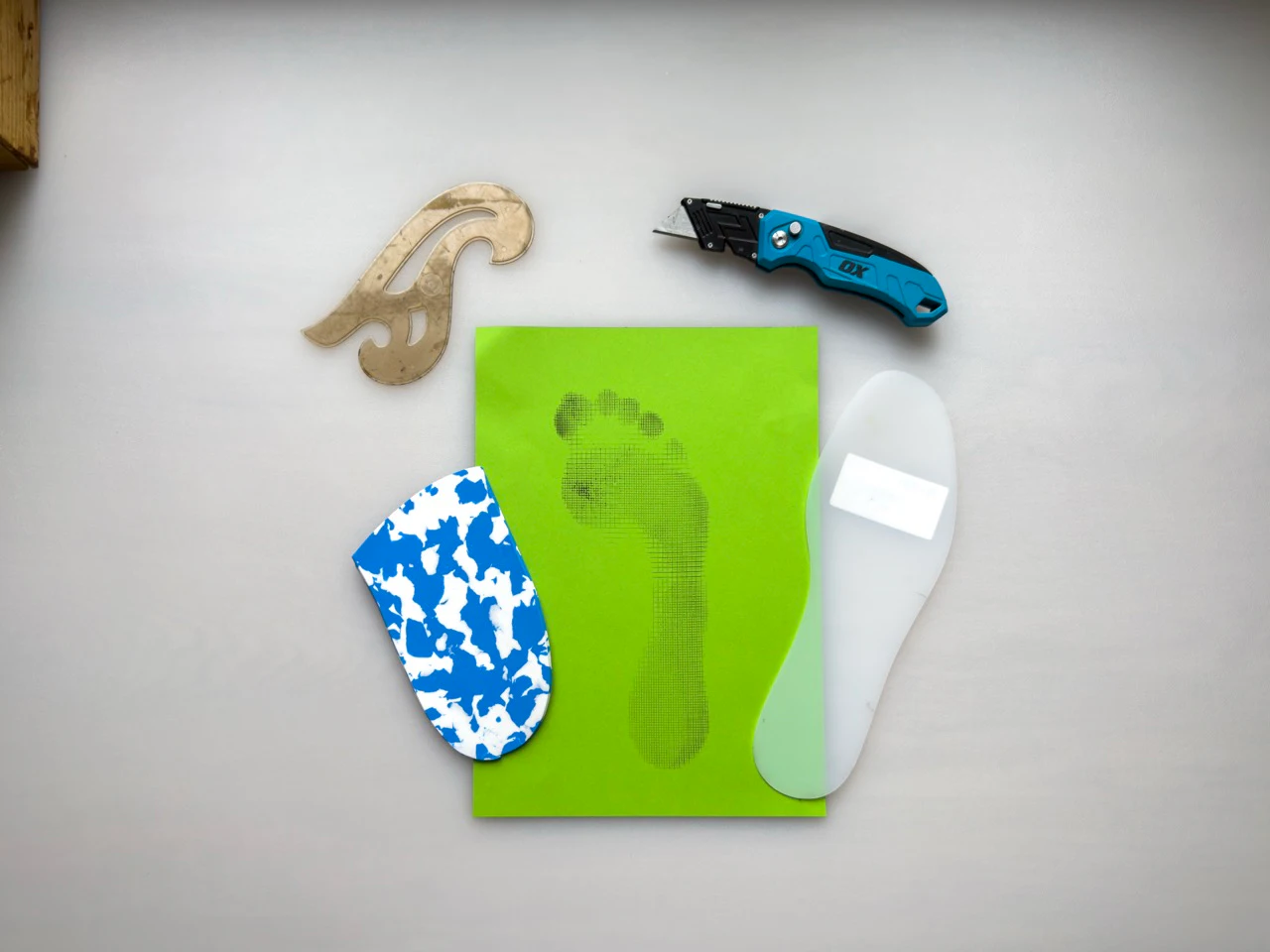
Custom orthotics are devices made from a precise mould or scan of an individual's feet, designed to correct the specific biomechanical issues identified during a clinical assessment. Unlike a generic insole that assumes a standard foot shape, a custom orthotic is built around an individual's arch height, pressure distribution, and walking pattern, then adjusted to address whatever imbalance is causing pain or dysfunction. The process typically begins with a biomechanical gait analysis carried out by a podiatrist, who examines gait, posture, and foot structure before any device is made.
This level of personalisation is what separates custom orthotics from anything available off a shelf. The materials, the shape, and the degree of correction built into the device are all chosen specifically for the person wearing them, rather than for an average foot type that may bear little resemblance to their own. That distinction matters considerably when it comes to whether the device actually resolves the underlying problem rather than simply cushioning the symptom.
How Much Do Custom Orthotics Cost in 2026?
Custom orthotics cost in the UK typically ranges from around £300 to £700 or more, depending on the provider, the complexity of the assessment, and the materials used in manufacturing. Lower-cost options tend to involve a simpler casting process and basic materials, while higher-end devices reflect more detailed biomechanical assessment, advanced scanning technology, and materials selected for specific activities such as running or sports performance. Clinics offering podiatry services will usually outline pricing during an initial consultation, once the complexity of the case is clear.
It helps to understand what drives this range rather than assuming higher cost automatically means better quality. A straightforward case involving mild arch support may sit toward the lower end, while a condition requiring detailed gait analysis, custom adjustments, and ongoing review will naturally cost more.
Custom Orthotics vs Over-the-Counter Insoles
The most obvious difference between custom orthotics vs insoles bought from a pharmacy is the level of personalisation involved. Over-the-counter insoles are manufactured in a small range of generic sizes and arch profiles, designed to provide a reasonable level of comfort for as many foot types as possible. This approach works adequately for light, generalised discomfort, but it cannot correct a specific biomechanical fault because it was never designed with that individual's foot in mind.
Orthotics vs over the counter insoles becomes a more meaningful comparison once a specific diagnosis is involved. A custom insole is built to address a precise issue, such as excessive pronation, a leg length discrepancy, or a particular pressure point causing pain, in a way that a generic insole simply cannot replicate. Healthline's orthotics guide outlines this distinction clearly, noting that custom devices are typically recommended once over-the-counter options have failed to provide adequate relief. A few people with mild, short-term discomfort, an over-the-counter insole may be entirely sufficient.
What Are You Actually Paying For?
The cost of a custom orthotic reflects considerably more than the physical device itself. A significant portion of the price covers the clinical time involved in the biomechanical assessment where a podiatrist examines gait, posture, joint mobility, and pressure distribution to identify the precise cause of pain or dysfunction and the time and skill needed to make them. This diagnostic process is what determines the design of the orthotic, and it is arguably the most valuable part of the entire process.
The remaining cost covers the time and skill needed to manufacture a pair, including the materials chosen for durability and support. Many providers also include a review appointment in the price, allowing adjustments to be made if the initial fit is not feeling quite right. Considering all of these elements together gives a clearer picture of what the benefits of custom orthotics actually depend on, since the value lies in the accuracy of the diagnosis and the manufacturing as much as in the final product.
Conditions That Benefit Most from Custom Orthotics
Certain conditions show a clearer benefit from custom orthotics than others, largely because they involve a specific structural or biomechanical fault that generic support cannot correct. Plantar fasciitis frequently improves with a custom device that redistributes pressure away from the heel and supports the arch in a way matched to the individual's foot shape, rather than a generic level of cushioning. Flat feet and excessive pronation are similarly well suited to custom orthotics, since correcting the degree of arch collapse requires a device built around the specific severity of the condition.
Heel pain, knee pain linked to lower limb alignment, and certain posture-related issues can also respond well to a properly designed orthotic, since correcting how the foot loads during walking often reduces strain further up the kinetic chain. The NHS's foot pain advice page notes that addressing the underlying mechanical cause of foot pain, rather than only managing symptoms, tends to produce better long-term outcomes. A clinical assessment remains the only reliable way to determine whether a specific condition will respond well to a custom device, since not every case of foot or knee pain has a biomechanical origin that orthotics can address.
When Custom Orthotics May Not Be Necessary
Custom orthotics are not the right solution for every type of foot discomfort, and a reputable podiatrist will say so when appropriate. Mild, short-term soreness from a new pair of shoes, occasional fatigue after a long day on your feet, or general discomfort without any underlying structural issue often resolves with simple measures such as supportive footwear, stretching, or a semi - custom insole. Recommending a custom device in these cases would add unnecessary cost without a corresponding improvement in outcome.
The distinguishing factor is usually persistence and pattern. Pain that resolves within a few days, does not recur, and has no clear link to a specific biomechanical issue rarely justifies the cost of a custom orthotic. Mayo Clinic's foot health advice resource similarly notes that conservative measures are often appropriate as a first step before more involved interventions are considered, which reflects standard clinical practice across most podiatry providers.
How Long Do Custom Orthotics Last?
Most custom orthotics last around 2 years, depending on the materials used, the intensity of use, and how well they are maintained. Devices made from more rigid materials designed for everyday shoes tend to last longer than softer, more cushioned versions made for sports use, since the latter compress more quickly under repeated high-impact loading. Regular wear across a full working week will naturally shorten the lifespan compared with occasional use, simply due to the cumulative load placed on the materials.
It is also worth noting that an orthotic may need to be replaced or adjusted sooner than expected if the underlying condition changes, body weight shifts significantly, or footwear needs change. A periodic review with a podiatrist can confirm whether an existing device is still performing as intended or whether an adjustment or replacement would better serve the current need.
Are Custom Orthotics Covered by Insurance?
Custom orthotics are not typically funded through the NHS unless prescribed as part of a specific clinical pathway, such as diabetic foot care or treatment following certain orthopaedic conditions, and even then provision varies by region and individual circumstances. Most people in the UK access custom orthotics privately, either by paying directly or through private health insurance, where cover depends entirely on the specific policy and provider. Some private health insurance plans include podiatry or orthotics under musculoskeletal cover, though this is far from universal and is worth confirming directly with the insurer before booking an assessment.
Workplace health schemes are another route some people overlook, since certain employers include podiatry or orthotics as part of broader occupational health benefits, particularly in roles that involve prolonged standing or physical activity. Checking with an employer's HR department or benefits provider before paying privately can sometimes reveal a contribution toward the cost. Where no funding route applies, providers will usually outline the full cost transparently during the initial consultation, allowing an informed decision before committing to treatment.
How to Know If You Need Custom Orthotics
Recurring pain that has not responded to rest, supportive footwear, or over-the-counter insoles is one of the clearest indicators that a custom assessment may be worthwhile. Pain that consistently returns in the same location, particularly the heel, arch, or ball of the foot, often points to a biomechanical pattern that generic support cannot correct on its own. Similarly, noticeable asymmetry between how the two feet feel or function, or pain that radiates upward into the knee, hip, or lower back, can indicate that the feet are compensating in a way that warrants closer examination.
A biomechanical assessment is the most reliable way to answer this question with any certainty, since it allows a podiatrist to observe gait and pressure distribution directly rather than relying on guesswork. The American Podiatric Medical Association's orthotics information resource recommends professional assessment before purchasing custom devices, precisely because an accurate diagnosis is what determines whether the investment will be effective.
Questions to Ask Before Buying Orthotics
Before committing to a custom orthotic, it is worth asking the provider what specific condition the device is designed to address and how that diagnosis was reached. A clear answer should reference findings from a proper assessment rather than a generic recommendation based on a brief conversation. It is equally reasonable to ask what the price includes, since some providers bundle in follow-up adjustments and review appointments while others charge separately for these.
Asking about the expected lifespan of the device, the materials used, and whether the orthotic is designed for everyday wear or a specific activity will help set realistic expectations from the outset. Finally, asking what happens if the initial fit does not feel right, including whether adjustments are included in the price, helps avoid unexpected costs later and confirms that the provider stands behind the accuracy of their work.
Are Custom Orthotics Worth the Investment?
Whether custom orthotics justify their cost comes down to the nature of the problem being addressed. For conditions with a clear biomechanical cause, such as plantar fasciitis, flat feet, or pain linked to abnormal loading patterns, a properly assessed and manufactured orthotic often delivers a level of correction that generic insoles cannot match. For milder, short-term discomfort without a specific structural cause, simpler and less expensive measures may resolve the issue just as effectively.
The clearest way to determine which category applies to your situation is a proper clinical assessment rather than guesswork or trial and error with generic products. Understanding what you are paying for, from the diagnostic process through to the manufacturing and any follow-up care, makes the decision considerably easier to evaluate on its own merits.
Book a professional assessment today and find out whether custom orthotics are the right solution for your foot pain treatment and mobility needs.